
XX International Conference
on Space Biology and Aerospace Medicine
The BION-M №2 Project
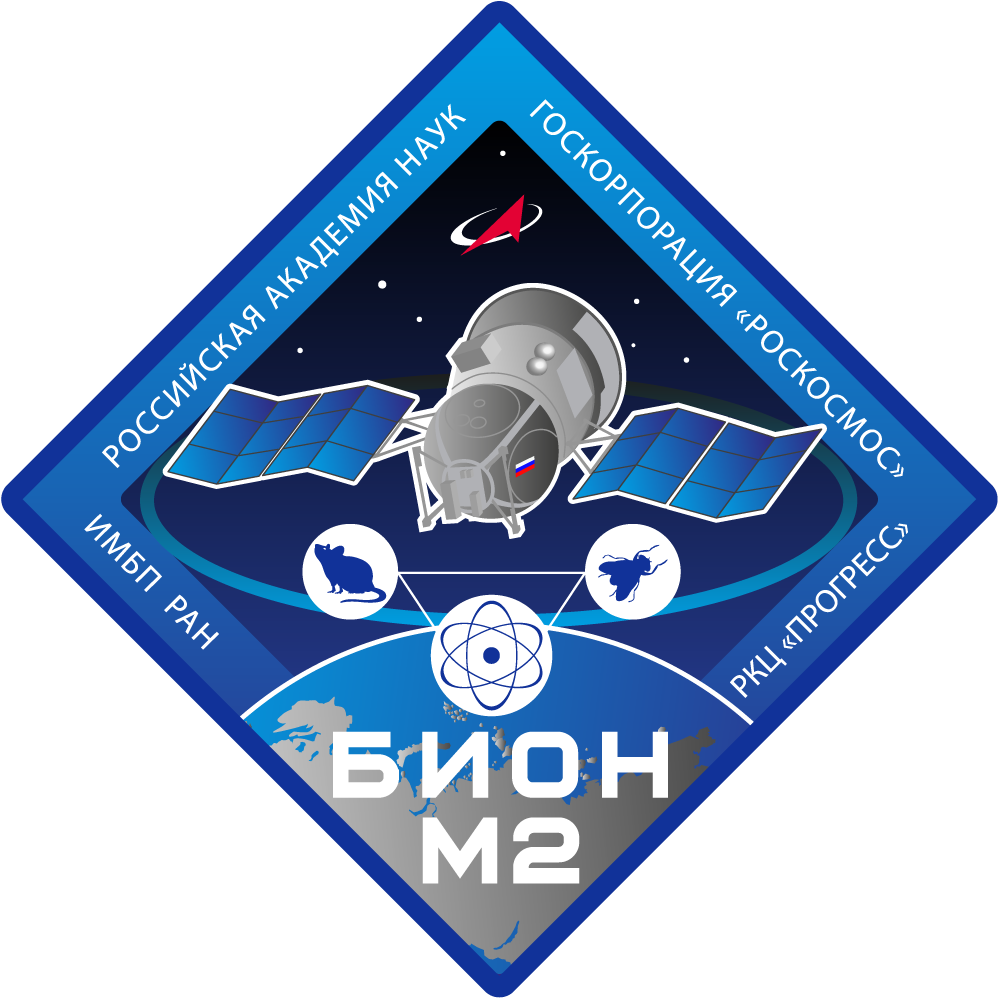
Final results and role in safe interplanetary spaceflights
27–29 october 2026
State Space Corporation «Roscosmos»
MINISTRY OF SCIENCE AND HIGHER EDUCATION OF THE RUSSIAN FEDERATION
RUSSIAN ACADEMY OF SCIENCES
INSTITUTE OF BIOMEDICAL PROBLEMS OF THE RUSSIAN ACADEMY OF SCIENCES
CALL FOR PAPERS
Dear colleagues, we would like to inform you that on October 27-29, 2026, Moscow will host the XX International Conference on Space Biology and Aerospace Medicine titled the BION-M №2 Project. Final results and role in safe interplanetary spaceflights. The conference is organized by the ROSCOSMOS State Space Corporation, the Ministry of Science and Higher Education of the Russian Federation, the Russian Academy of Sciences, and the Institute of Biomedical Problems of the Russian Academy of Sciences.
When we speak about future piloted missions to deep space, the Moon and Mars, there are still questions arising around the biological consequences of the combined effects of space flight factors present beyond the geomagnetical field. The key problem is to investigate how the human body reacts to new factors of space flight at the cellular and molecular levels. In the first place, the BION-M №2 spacecraft research program was developed specifically to tackle this challenge.
Starting from the 1970s the Russian Academy of Sciences has been organizing and sponsoring scientific research on biological satellites, including the BION-M №2 mission. For the first time, the flight of the Bion-M spacecraft took place in a sun-synchronous (polar) orbit, from where future spacecraft are likely to depart into deep space. Unlike the well-studied orbit with an inclination of 50-60°, the impact of a space flight in a high-latitude orbit on biological objects and its safety for the health of astronauts has been almost not investigated. The BION-M №2 flight in the polar orbit was necessary to to indicate biomedical risks, and justify methods of protection and biomedical support measures for human missions in this unexplored orbit.
The scientific research program of the BION-M №2 mission consisted of 29 experiments, including studies on biological objects from various taxonomic groups.
At the upcoming conference, we are expecting to discuss the results of the BION-M №2 project in the following areas:
- research on animals and animal cell cultures
- research on plants
- studies of microorganisms
- exobiological and astrobiological experiments
- radiation studies in high-latitude orbit inside and outside of the spacecraft
- physical and technical experiments
- educational experiments
We invite you to take part in the upcoming event!
ABSTRACTS SUBMISSION:
We accept abstracts of up to 3 pages of typewritten text. The abstracts should specify: the supposed field of science (in accordance with the Conference's list above), the title and type of the report (oral presentation on-site or via teleconference/poster presentation), the authors' full names and affiliation, contact e-mails. Presentation time is 15 minutes, and 5 minutes for questions.
The working languages are Russian and English.
Abstracts are submitted via the conference website starting from February 9, 2026. The deadline for accepting abstracts is August 3, 2026.
Participation in the Conference is free of charge with mandatory pre-registration.
FORMAT OF THE EVENT: HYBRID (on site and via videoconference)
VENUE: 76a Khoroshevskoe shosse, IBMP RAS, Moscow, Russia.